
Home » Is It Safe To Dig Here? A Guide To Safe Digging And Utility Locates For Illinois Homeowners
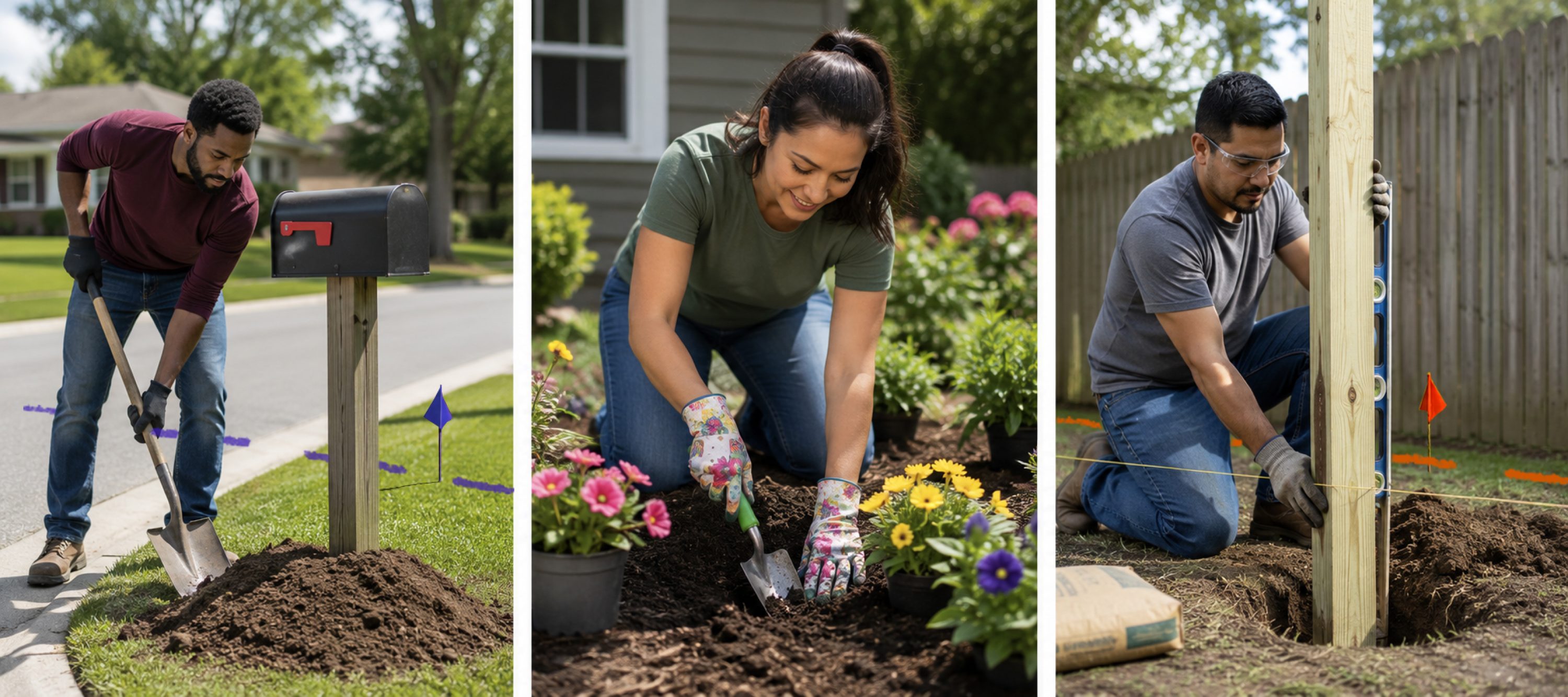
One of the first questions you should ask yourself before undertaking any digging project is: is it safe to dig here? For many Illinois homeowners, the answer isn’t obvious.
Underground utility lines can be buried almost anywhere on your property, and they aren’t always where you expect them to be. Digging without knowing what’s below the surface can result in damaged utilities, costly repairs, project delays, service interruptions, and even serious injury. Fortunately, one simple step can help protect you, your family and your neighbors—contacting JULIE before you dig.
Many utilities travel underground to connect your home to essential services. You may assume these underground utility lines only run near the street or in easements but in reality, any one of these services may cross your yard before reaching your home.
Underground utility lines commonly enter residential properties in one of three ways:
Although your property’s survey or plat may identify utility easements, it won’t show the precise location or depth of buried utility lines. Likewise, visible features such as electric meters, gas meters, water meters, transformer boxes, utility pedestals, or manholes only indicate where services connect—not exactly where underground facilities are buried. That’s why you should never rely on guesswork before digging.
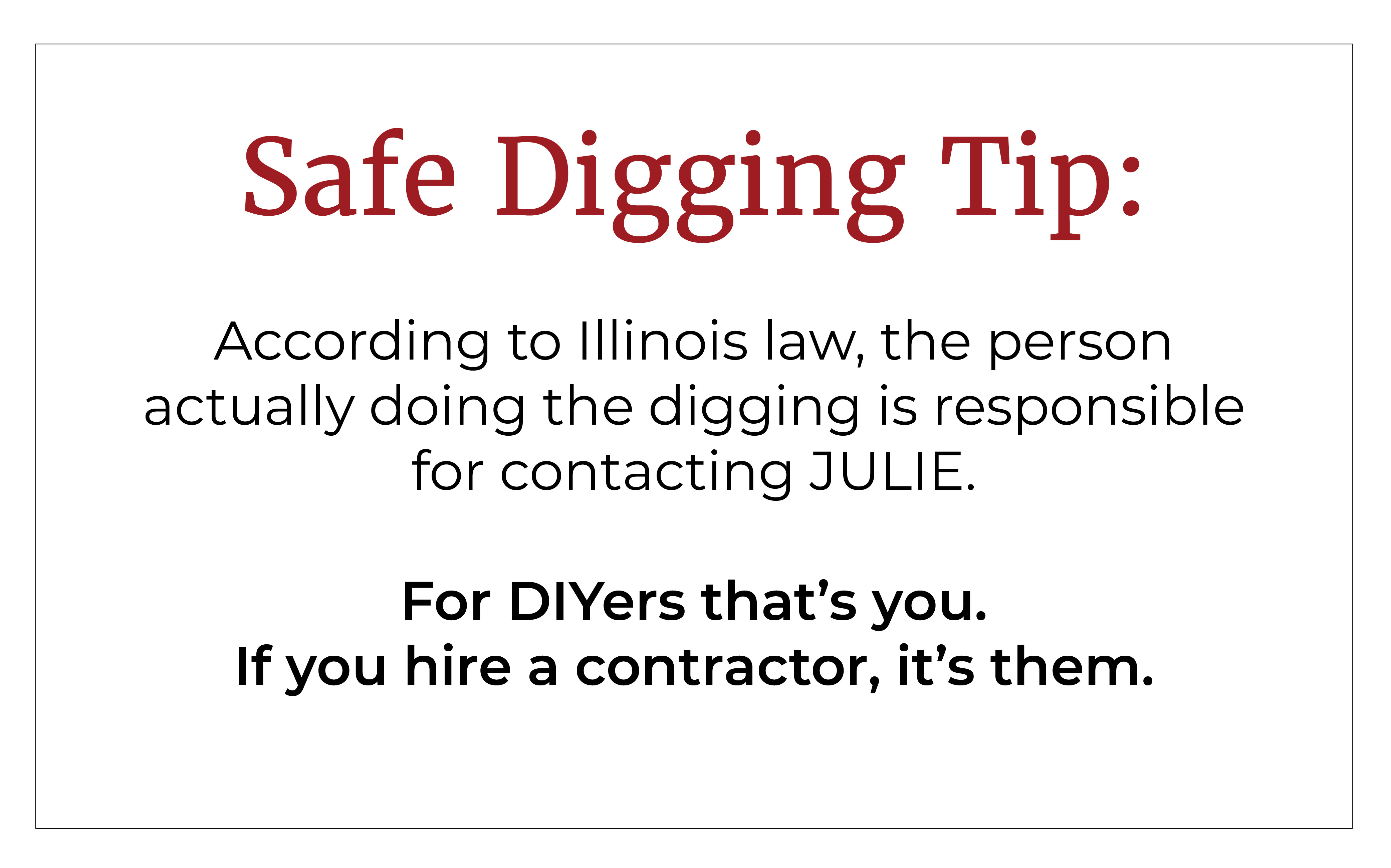
Whether you’re digging just a few inches or several feet, there’s always a possibility you’ll encounter an underground utility line. That’s why the law requires Illinois homeowners and contractors request utility locates before beginning any excavation project.
Damaging an underground utility line can quickly turn a simple weekend project into an emergency. Striking a buried line may result in:
Even shallow digging for landscaping, mailboxes, fences, swing sets, or shrubs can damage buried utilities.
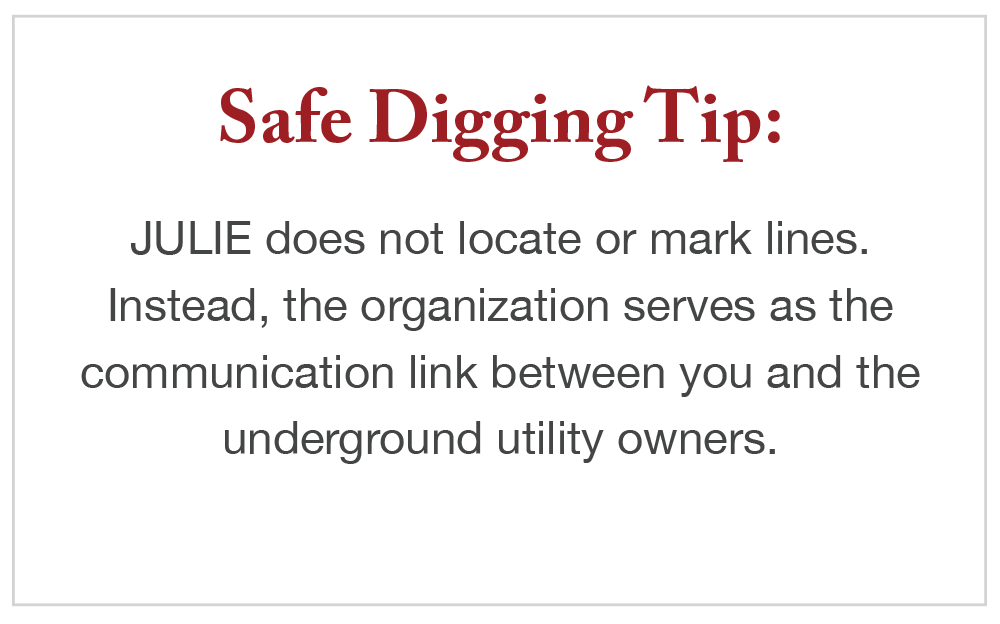
Requesting a utility locate is easy—and it’s FREE. You simply contact JULIE before you dig 24/7/365 to submit a locate request online or over the phone by calling 811 or (800) 892-0123. JULIE notifies the utility companies serving your area about your planned excavation. Those utility companies are then responsible for locating and marking the approximate location of their underground lines using color-coded paint or flags. They may also provide notice that their lines are “clear” or not in conflict with your proposed project. Only after you’ve confirmed every utility has responded to your request using the Positive Response system can you begin your project. Even then you should use extra care around the marked lines in the tolerance zone.
Every year, underground utility lines are damaged because someone assumed they knew what was below the ground. Don’t let your next home improvement project become one of those incidents. Before planting, building, adding, fixing, or starting any excavation project, stop and ask yourself: is it safe to dig here? If underground utility lines haven’t been marked, the answer is not yet.
Make safe digging part of every project. Taking just a few minutes to request utility locates through JULIE helps protect your property, your community and the essential services everyone relies on.